Places
The Sound of Doha
On Doha’s understated musical sphere
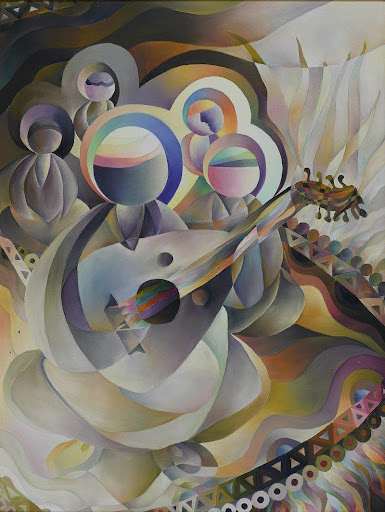
It was the first semester of my graduate studies in Doha. At a gathering with fellow Lebanese students, we spent the evening exchanging stories about where we had studied in Lebanon and what had brought us to Doha. Two other Arab students had also joined us.
As we talked about university and our new lives in Doha, I discovered that the two students were both oud players. I had played the oud for years but had neglected it after becoming consumed by my studies. I woke up the next morning thinking, “I must get an oud.”
Two weeks later, I found my way to Angham Al Sharq, an oud shop in Al-Gharrafah. I left with an Egyptian oud that cost 700 riyals, the cheapest one I could find. After years away from the instrument, my fingers had forgotten much of what they once knew. I began practicing again in the garden of my compound, where passing students would sometimes stop to listen or encourage me.
Over the past decade, Qatar has invested heavily in Doha’s arts and cultural scene, from landmark museum openings to international partnerships led by Qatar Museums, under the leadership of Sheikha Al-Mayassa Al-Thani.
Before arriving in Doha, I viewed its cultural scene largely through its visual expressions, from museums and galleries to cultural events.
It was only through my attempt to return to an old hobby that I was gradually introduced to a different side of the city: the sound of Doha.
The sound of Doha is not tied to a particular genre or group of musicians. Rather, it is a musical culture sustained by the people, spaces, events and institutions that shape the city’s musical life. My reconnection with the oud became a way of discovering this less visible side of Doha, a journey that led me to Katara.
Take the Katara Oud Center, a space dedicated to the oud, its players, enthusiasts and musicians, which regularly hosts musical events and gatherings. Beyond its events, the center also displays ouds in an extraordinary variety of forms and traditions: Syrian, Iraqi, Bahraini, Iranian, Turkish and Egyptian.
The variety of instruments offered a glimpse of the different musical traditions coexisting in Doha. For me, the center was not simply a place to observe the oud again, but an introduction to the traditions and cultures that continue to give it life. Walking through the center felt like entering a small archive of the instrument’s history across the region — an oud heaven.
My encounter with the oud extended beyond the center in 2025, when Katara hosted its Fourth Oud Festival. The festival honored the Qatari oud composer Abdulaziz Haidos and brought together oud players and composers from around the globe.
Over four days, the festival featured live performances, workshops and discussions dedicated to the instrument, which Katara described as not simply an instrument, but an expression of Arab cultural identity. Where the center introduced me to the oud’s different traditions through the instrument itself, the festival brought those traditions to life through performances, workshops and exchanges among musicians. I was hoping the festival would return again this year, but it unfortunately has not.
My exploration of Doha’s musical culture eventually took me beyond spaces dedicated to the oud and toward an institution devoted to preserving and sharing the music itself: Sout Al Khaleej.
Earlier this year, I happened to visit Sout Al Khaleej, a Doha-based radio station launched in 2002 with a mission to preserve and promote the musical heritage of the Gulf.
The station’s simple building in Katara, with its blue carpets, brightly colored walls and ouds displayed throughout its halls, felt like a time capsule of an earlier era of Arab media.
Yet behind its understated appearance lies a significant musical archive, particularly its “Jalasat” – musical sessions featuring some of the most prominent voices in Gulf music. Through these sessions, Sout Al Khaleej has recorded performances by major Arab and Gulf artists, preserving works that have become part of the region’s musical memory. Among them is Abu Bakr Salem, the Yemeni artist once named the father of Gulf singing. Salem’s voice features in more than 60 of the station’s exclusive Jalasat, with recordings dating back to 2007.
Although his music was deeply rooted in Yemeni and Gulf traditions, Sout Al Khaleej’s recordings preserve his performances as part of the wider Arab region’s musical memory. His legacy received a tribute in October 2025 when a concert at the Al Mayassa theatre, Qatar National Convention Centre, celebrated his life and music. Directed by Kuwaiti Maestro Dr. Khaled Nouri, the concert brought his music, once again, to Doha’s musical scene.
The station’s archive, nevertheless, showed me that Doha’s musical sphere extends beyond the oud center and live performance, to the media institutions that record, preserve and circulate music across generations.
Through this journey, I discovered a side of Doha that I had not known how to look for or even known existed. A place where music is not only performed but also collected, preserved, passed on and brought back to life. Returning to the oud has given me a way to hear this side of the city: the Sound of Doha.